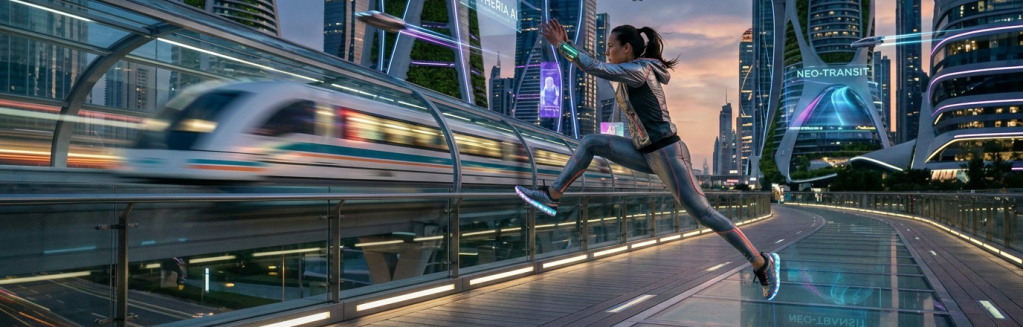
If you had you asked me this question a year or two ago, I would have emphatically said “yes,” but as we see, times are changing, and at warp speed no less. At this point we either jump on the train or get left behind.
As a designer, the bottom line and end goal is to deliver the best product for our clients. Jumping on the train does not mean forfeiting human creativity but instead, if we learn to utilize AI as a business tool, we can elevate our own mind’s output. In essence, use AI as a contracted employee who receives very little pay, if any.
Let’s say you’re struggling to pinpoint a specific design element or perhaps looking to capture a particular audience and in need of targeting and marketing trends. Enter AI. Your personal grunt work assistant tasked to research and offer concept suggestions based on your needs and prompts. An undertaking that would normally be laborious, now taking mere moments to develop; affording valuable designer time to be focused and well spent on design cultivation and creativity of product.
Any output received from AI is almost always in need of refinement, extraction of elements, or baseline use with complete overhaul of visual data. Creativity is not lost when keeping in mind that AI is a tool; a supportive underling, taking directives based off your human input.
So, no—for me as a designer, using AI in responsible and honest ways is not cheating. When AI is called upon, it is to act as my employee. Sometimes to assist in firing the cylinders in the human creative vortex if facing a creative block, or on occasion simply to lend a hand refining the conceptualization of an already outlined idea.
In this designer’s opinion, it’s near impossible to take an AI driven idea and simply present it to a client as is. That’s entirely too amateur and offers very little personal satisfaction. For that reason, I do not believe there are many professional designers who would rely solely on AI for their creations. Creatives by nature crave end-products that embody their personal creative flare and visions. Ego does not allow a true creative’s stamp to not be present on a design.
So, while we keep mindful of the pull of AI and the over-dependence that can form, we also recognize the importance of not taking too hard a stance against it. If we fail to adapt, we are left at the station waving at those who boarded the train. Or worse yet, we are crushed on the tracks.
Small Business?
Small Budget?
BIG RESULTS are just a click away.
Contact RCM today to get started.


Leave a Reply